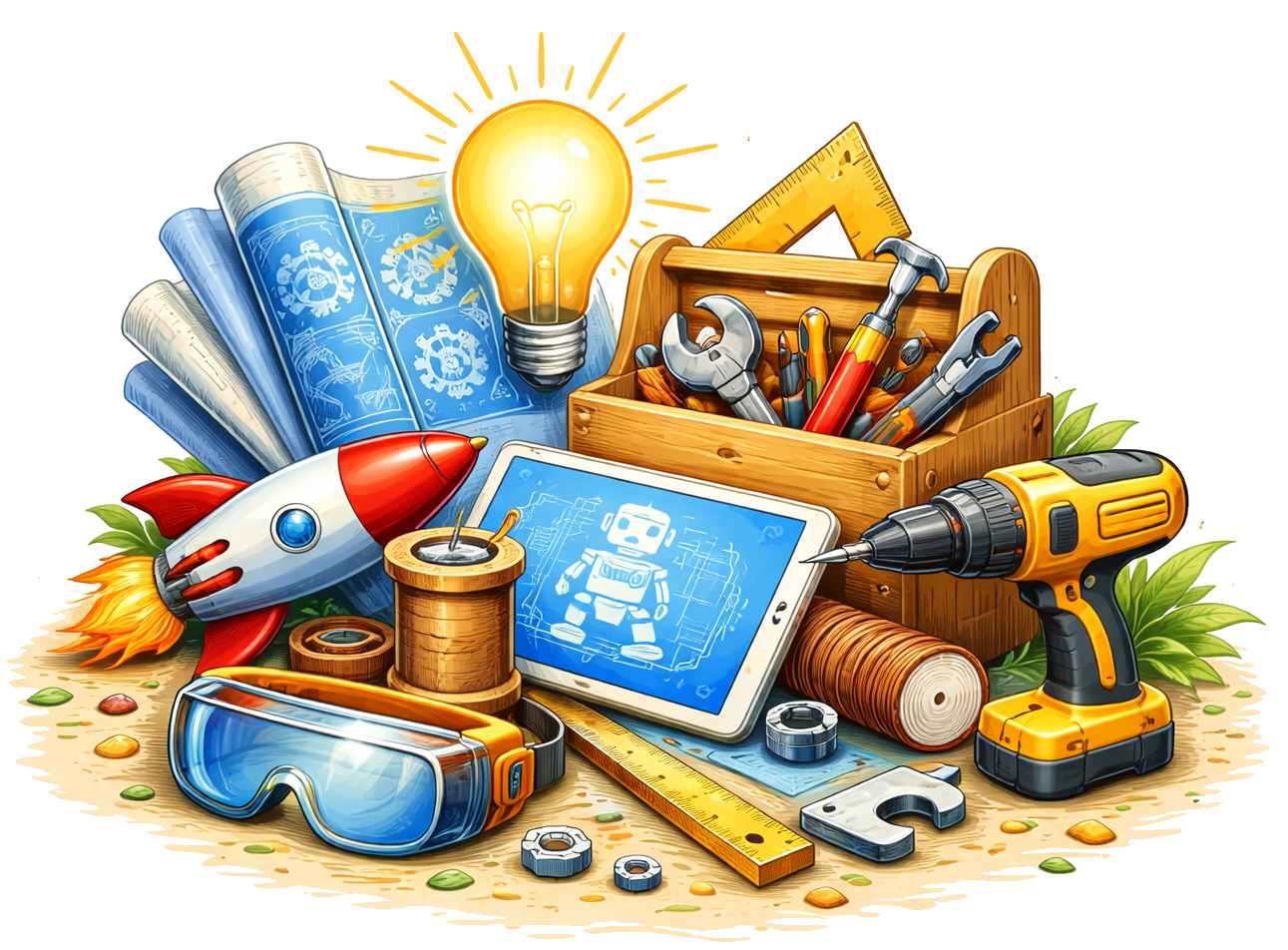
Design for Access: Usable for Many People
Making and building starts with noticing needs. People make things to carry, store, protect, connect, and solve problems in daily life. We connect building to efficiency, sustainability, and responsibility. We can evaluate solutions using criteria like fairness, durability, and sustainability. We can connect local building choices to global supply chains. We can separate evidence from opinion when judging designs.
Tools help us do work that hands alone cannot do well. A tool can cut, hold, pull, measure, or join materials more safely and accurately. We connect building to efficiency, sustainability, and responsibility. Design for access means thinking about many users. Handles, labels, and layouts can be made easier for children, elders, and people with disabilities. We can connect local building choices to global supply chains. We can separate evidence from opinion when judging designs. We can name actions at personal, community, and policy levels.
Materials matter. Wood, metal, plastic, fabric, paper, and clay each have strengths and weaknesses that change what we can build. We connect building to efficiency, sustainability, and responsibility. Accessible design often helps everyone, because it reduces confusion and makes systems safer. We can separate evidence from opinion when judging designs. We can name actions at personal, community, and policy levels. We can evaluate solutions using criteria like fairness, durability, and sustainability.
Design is planning before building. We choose a goal, sketch an idea, gather supplies, and decide the steps we will follow. We connect building to efficiency, sustainability, and responsibility. We can name actions at personal, community, and policy levels. We can evaluate solutions using criteria like fairness, durability, and sustainability. We can connect local building choices to global supply chains.
Testing helps us learn. We check if a bridge holds weight, if a container leaks, or if a handle is comfortable and strong. We connect building to efficiency, sustainability, and responsibility. We can evaluate solutions using criteria like fairness, durability, and sustainability. We can connect local building choices to global supply chains. We can separate evidence from opinion when judging designs.
Fixing is part of making. When something fails, we look for the weak point, change one thing, and try again. We connect building to efficiency, sustainability, and responsibility. We can connect local building choices to global supply chains. We can separate evidence from opinion when judging designs. We can name actions at personal, community, and policy levels.
Building is also teamwork. Safe work, clear roles, and respect for others help groups make better results than one person alone. We connect building to efficiency, sustainability, and responsibility. We can separate evidence from opinion when judging designs. We can name actions at personal, community, and policy levels. We can evaluate solutions using criteria like fairness, durability, and sustainability. We can evaluate solutions for fairness and real impact. We can evaluate solutions for fairness and real impact. We can evaluate solutions for fairness and real impact. We can evaluate solutions for fairness and real impact. We can evaluate solutions for fairness and real impact. We can evaluate solutions for fairness and real impact. We can evaluate solutions for fairness and real impact. We can evaluate solutions for fairness and real impact. We can evaluate solutions for fairness and real impact.
Quiz 1
- Define the main idea in one sentence.
- Give one real-world example that fits.
Quiz 2
- Describe one cause-and-effect chain in a design.
- Name one trade-off you would accept and why.
Quiz 3
- What does fairness mean in building and manufacturing?
- Name one way to reduce harm.
Quiz 4
- How does technology change building power and access?
- Name one benefit and one risk.
Quiz 5
- Name one action you can take personally.
- Name one action communities or governments can take.